The EU sealed a passenger rights deal this morning that budget airlines fought against for thirteen years.
If you fly to or from any EU country, even as a UK-based traveller booking summer flights right now, you are directly affected.
Cabin bag fees are being absorbed into base fares. Your right to €600 compensation for long delays survived intact. The new rules kick in from late 2027.
The Key Facts
- Deal confirmed today after EU ambassadors approved the reformed EU261 text on Friday 13 June 2026
- Free cabin bag (up to 7kg, max 100cm total dimensions) must be bundled into advertised base fares from late 2027
- Three-hour delay threshold PRESERVED — €250 to €600 compensation is unchanged; airlines wanted to raise this to four to six hours
- New: children under 14 must sit next to an accompanying adult at no extra seat charge
- Timeline: MEP plenary vote July 8; law enters force second half of 2027

What Is Actually Happening
EU ambassadors approved the reformed EU261 deal on Friday 13 June, ending a negotiation that first opened in 2013.
The conciliation committee of MEPs met this morning for the formal sign-off. A full plenary vote is scheduled for 8 July 2026. The law then enters force in the second half of 2027.
The most important thing it did NOT do: raise the three-hour delay threshold. The EU Council had pushed for four to six hours depending on route length. Had they succeeded, analysts estimated 60 to 70 per cent of passengers who currently qualify for compensation would have lost that right entirely.
On cabin bags, the deal stops short of a simple outright ban on charging. Instead, airlines must include a carry-on bag in the advertised base fare. They can offer a cheaper option to passengers who want to opt out and travel with only a small personal item.
The personal item allowance (the free underseat bag) remains unchanged at 40 by 30 by 15cm. The new bundled carry-on must be up to 7kg with combined maximum dimensions of 100cm.
Other confirmed additions: airlines can no longer force passengers to download a mobile app to get a boarding pass. Children under 14 must be seated next to an accompanying adult for free. Airlines must send passengers clear guidance on how to claim within 96 hours of a qualifying delay or cancellation. Spain and Latvia voted against the compromise, with Austria and Finland abstaining. Spain said the deal did not go far enough.
What Passengers Are Saying Right Now
EU Parliament rapporteur Andrey Novakov, who led the Parliament’s negotiating team throughout the process, posted this after ambassadors approved the deal:
“EP promised passengers that their rights would not move backwards and we didn’t give up. Today’s COREPER decision confirms it. The 3-hour threshold is preserved. Compensation is preserved. New rights are added, beyond the status quo.”
EP promised passengers that their rights would not move backwards and we didn’t give up. Today’s COREPER decision confirms it. The 3-hour threshold is preserved. Compensation is preserved. New rights are added, beyond the status quo. A final vote remains in EP on Monday. ✈️
— Andrey Novakov (@AndreyNovakov) June 12, 2026
On Reddit’s r/Ryanair forum, where 483 passengers upvoted the original story about the reforms, the reaction cut through the policy language quickly.
One comment, by user bbohblanka, put it in seven words: “Prices didn’t go down when they added the fees a few years back.”
Comment from r/Ryanair
by u/bbohblanka in r/Ryanair
Frequent flyer forum Head for Points, which has tracked the negotiations closely, picked up on the business model implications almost immediately.
User davefl, one of the site’s most active members with over 3,000 posts, posted a breakdown of the deal and added: “I don’t think a certain Irish gentleman will like the first two.”
“I don’t think a certain Irish gentleman will like the first two.” (Referring to the free cabin bag requirement and the ban on charging families to sit together.)
davefl — Head for Points forum, 13 Jun 2026
What You Can Actually Do
The new rules do not apply until late 2027. But your rights today are already substantial. Here is what to do right now.
- Check which regulation covers your flight. If you depart from a UK airport on any airline, UK261 applies. If you depart from an EU airport (including on your return home from holiday), EU261 applies. Both use the three-hour threshold and near-identical compensation bands.
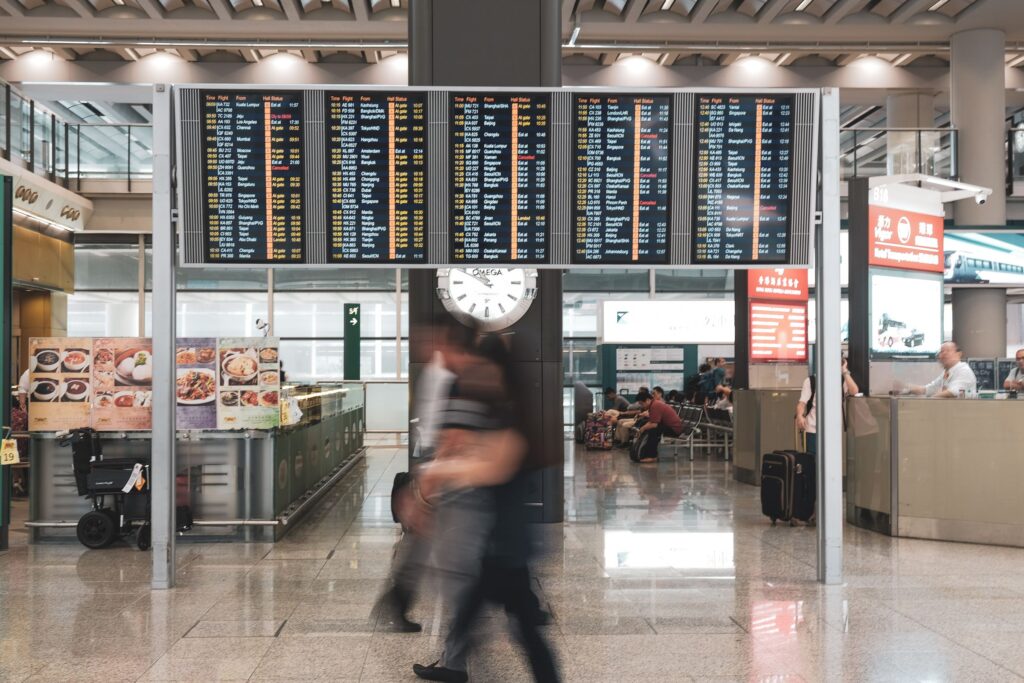
- Keep every piece of evidence from day one. That means a screenshot of the departure board, the airline’s delay notification text or email, your boarding pass, and receipts for any food or drink you buy while waiting. You will need these to support a claim.
- File your claim directly with the airline. Every airline operating EU or UK flights is legally required to have a claims process. Go to their own website and use the EU261 or UK261 claim form. Third-party claims companies take 25 to 35 per cent of any payout for doing what you can do yourself in under ten minutes.
- If the airline refuses, escalate to the CAA. For UK-departing flights, the Civil Aviation Authority handles enforcement. The CAA has been significantly more active in pursuing airline compliance since 2024. Many airlines settle before a formal CAA investigation is opened.
- For now, compare all-in prices when booking. The cabin bag transparency rule does not apply until 2027. Budget airlines will continue to show stripped base fares. Add up the base fare plus the bag fee to get the real price before you compare.

What You Are Owed
Under EU261 (and its UK equivalent, UK261), compensation is fixed by law and does not depend on your ticket price. A £29 Ryanair seat and a £290 British Airways seat on the same route earn exactly the same payout.
Both schemes require the delay to be caused by something within the airline’s control. Extraordinary circumstances, genuine severe weather, air traffic control strikes, and hidden manufacturing defects are excluded. Staffing shortages, technical faults within the airline’s maintenance control, and fuel supply issues are not extraordinary circumstances and do not excuse the airline.
Your EU261 and UK261 Compensation Rights
Compensation is fixed per passenger, per qualifying flight, regardless of ticket price.
Maximum per passenger for delays over 3 hours on flights over 3,500km from an EU or UK airport.
- Flights up to 1,500km (e.g. London to Barcelona): €250 under EU261 / £220 under UK261
- Flights 1,500 to 3,500km (e.g. London to Cairo): €400 / £350
- Flights over 3,500km (e.g. London to New York): €600 / £520
- Care while you wait: meals and drinks proportionate to your delay, hotel if you are held overnight
- Cancellations: choice of full refund or rerouting on the next available service
- From 2027 (EU departures only): cabin bag bundled in base fare; children under 14 seated next to adults for free; clearer claims guidance within 96 hours

Why This Keeps Happening
Budget airlines did not always charge for cabin bags. Through the 2000s, Ryanair and easyJet competed on genuinely low all-in fares. The shift came around 2010, when carriers began stripping inclusions from base fares and re-selling them as add-ons.
The economics were compelling. easyJet reported almost £2.6 billion in additional charges in its 2025 annual results, a large portion of which comes from baggage. Ryanair’s model is similar. The fees are not incidental revenue: they are structural.
The lobbying against this reform was sustained and well-funded. IATA argued that the free bag rule would work as a “reverse Robin Hood,” making the 99 per cent of passengers who do not experience long delays pay for a scheme that benefits only the one per cent who do. Airlines for Europe warned the changes could double the annual regulatory cost to carriers from €8.1bn to over €15bn.
What broke the deadlock was the June 15 deadline itself. Under EU legislative rules, if the conciliation committee did not reach agreement by today, the entire thirteen-year reform process would have lapsed. Both sides faced a binary choice: deal or collapse. The deal that emerged is a compromise: passengers keep what they had and gain on bags and family seating, but did not win the pre-filled compensation forms or the inflation-adjusted payout amounts that Parliament’s most ambitious proposals had sought.
AirHelp CEO Tomasz Pawliszyn, whose firm handles EU261 claims, summarised the outcome in comments to Brussels Signal: “Europe’s passengers can breathe a sigh of relief. We are proud that the European Parliament held the line and protected the core rights that millions of travelers rely on under EC261. The most harmful proposals were ultimately rejected.” He added that an adjustment for inflation in the compensation amounts would have been welcome, but the alternative was considerably worse. For more detail on how to file a claim under EU261, see the CAA guidance on flight delay rights.

The 2027 changes will reshape how budget airlines display their prices. But the rights you hold today, whether flying from Manchester, Malaga or Milan, are already strong enough to claim back hundreds of pounds if something goes wrong. Keep your boarding pass. Note the time you land. And file the claim yourself.