
Update, 4 June 2026: Hillary Dawa Sherpa has been found alive. Aerial search flights launched at dawn on 3 June located him on the mountain. Read the full story of his survival and rescue here.
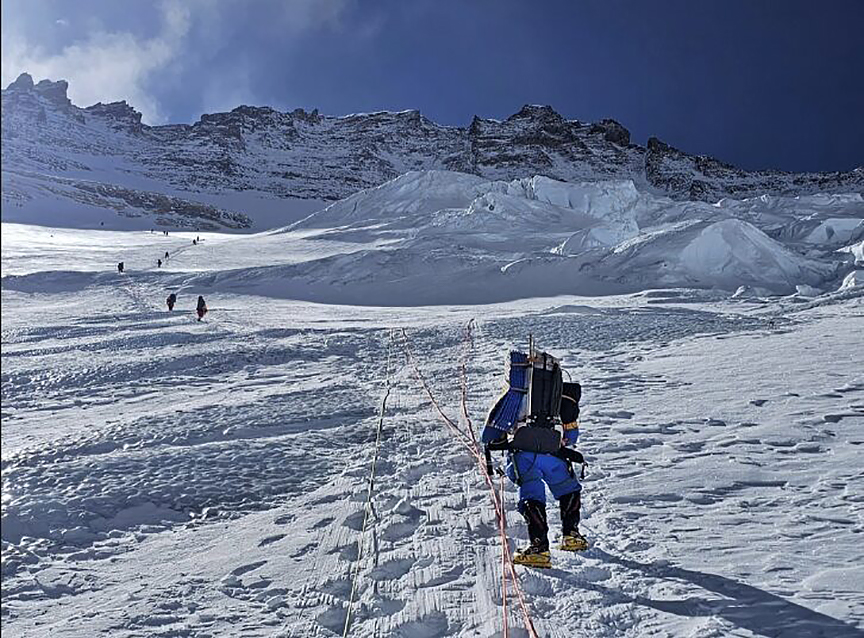
One thousand and eight climbers reached the summit of Mount Everest this spring, the highest number ever recorded in a single season in the mountain’s history.
Whether you are planning a trek to Base Camp or quietly dreaming of the summit itself, this was the season that changed the conversation about what the mountain truly demands of every person who ventures onto it.
Behind the records are five confirmed deaths and a sixth case still unresolved at the time of writing: a Nepali Sherpa guide last seen sitting alone on a rock at 7,600 metres, oxygen depleted, the mountain emptying around him as the season closed.
The Key Facts
- 1,008 summits recorded in spring 2026, clients and Sherpa guides combined, the first time in history the season total has passed 1,000.
- 274 climbers reached the Nepal-side summit on 20 May 2026 alone, smashing the previous Nepal-side single-day record of 223.
- 494 climbing permits issued by Nepal this season, the highest ever, generating over £6 million in permit revenue.
- Five deaths confirmed during the season, spanning guides, high-altitude workers and client climbers at every stage of the mountain.
- Aerial rescue authorised on 2 June for Sherpa guide Hillary Dawa Sherpa, widely described by the mountaineering community as tragically too late.
A Historic Season on the World’s Highest Mountain
The 2026 spring Everest season began with a three-week delay before a single crampon touched the Khumbu Icefall.
A massive hanging serac blocked the traditional route, keeping hundreds of climbers waiting at Base Camp while the Icefall Doctors worked to find a safe path around it.
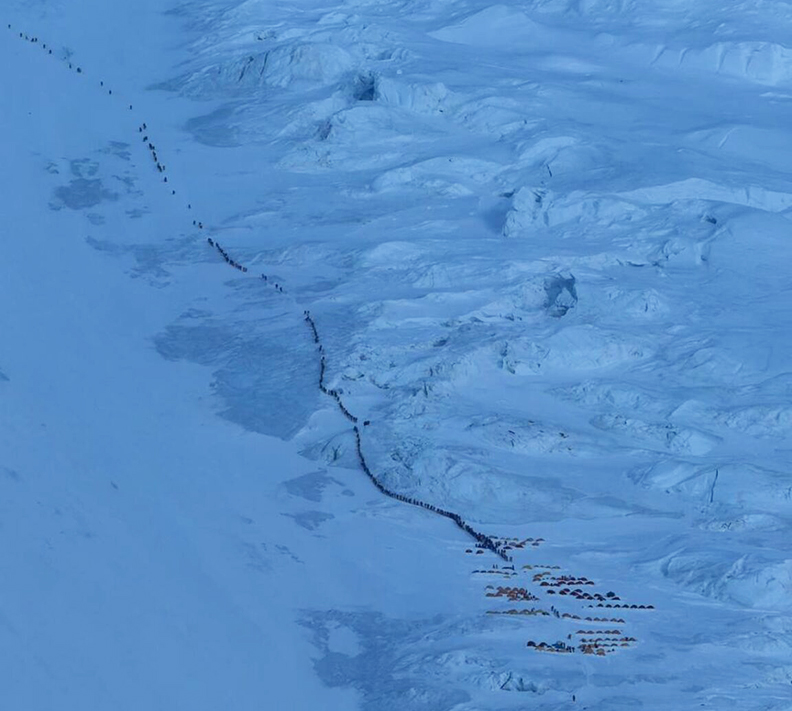
When the route finally opened on 28 April, the season compressed into a narrow, frantic window, with Nepal’s record 494 permits and the complete closure of China’s Tibet-side route pushing every expedition onto the Nepal south side.
That 494 permit figure and the 1,008 summit total are not a contradiction. Each permit covers one climber, but most permitted climbers ascend with one or two Sherpa guides whose successful summits are counted separately. The total of 1,008 is everyone who reached the top: clients, guides and high-altitude support staff combined.
On 20 May, that compression reached its peak: 274 climbers reached the Nepal-side summit in a single day, shattering the previous Nepal-side record of 223 set in 2019.
Kami Rita Sherpa summited for a record 32nd time, extending his own world record for the most Everest ascents in history. Lhakpa Sherpa secured her 11th summit, further cementing her status as the woman with the most Everest summits ever. American athlete Tyler Andrews completed a Base Camp to summit and back run in 9 hours and 55 minutes, breaking a no-oxygen speed record that had stood since 2003.
Alongside those achievements, deaths were accumulating through the season in the quiet way that Everest tragedies often do.
Lakpa Dende Sherpa, 52, died trekking to Base Camp on 3 May, before he had even reached the climbing. Bijaya Ghimire Bishwakarma, 35, a high-altitude worker from Nepal’s Dalit community, died in the Khumbu Icefall on 10 May. Phura Gyaljen Sherpa, 20, died after a fall on the Lhotse Face on 11 May. Indian climbers Arun Kumar Tiwari and Sandeep Are died on 21 May during their descents after summiting, the first foreign client deaths of the season.
Then, on the final day the Khumbu route was open, a sixth story began to unfold on the Yellow Band above Camp 3.
What Those Who Were There Are Saying
News of Hillary Dawa Sherpa spread through the mountaineering community over the days following the season’s closure, as climbers, journalists and expedition managers pieced together what had happened on the upper mountain on the evening of 29 May.
Dawa Sherpa, a guide from Okhaldhunga district in Nepal, had been left alone near the Yellow Band above Camp 3 after his Polish client, who was suffering from severe frostbite, had descended ahead of him toward Camp 2.
A Sherpa guide, named Dawa Sherpa from Okhaldhunga, Nepal has gone missing on Mt Everest after being left alone near the Yellow Band above Camp III during a descent from the South Col on 28 May, 2026. According to the latest information, his Polish client had suffered severe frostbite.
— Everest Today (@EverestToday) 31 May 2026
The picture on the ground became clearer over the days that followed, as reporters and expedition managers pieced together who had known what, and when, as the season came to a close around them.
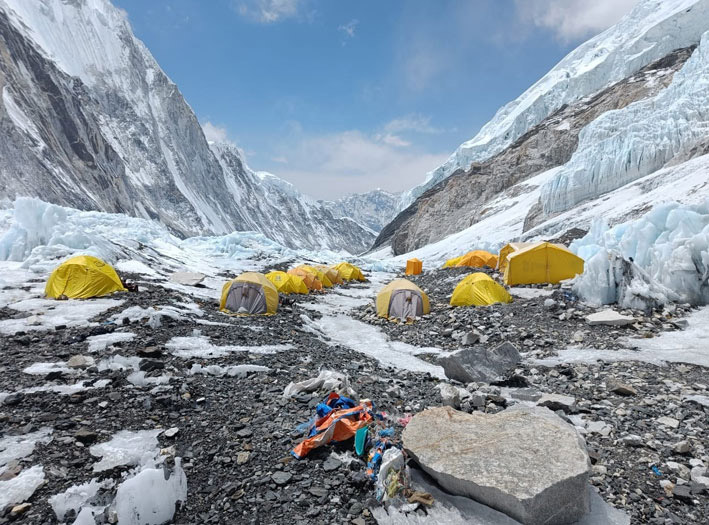
Three days had passed since Dawa Sherpa was last in contact with his team. No rescue attempt had been launched. The Icefall Doctors had already begun dismantling the route below Camp 1, closing the mountain for the season.
“It has been three days since he was last in contact. No rescue attempt or search operation had been launched. Meanwhile, Sherpas dismantled the route below Camp 1 across the Khumbu Icefall. Yesterday, a helicopter airlifted three remaining climbers from the mountain.”
Angela Benavides — ExplorersWeb — Sherpa Left Behind in Everest Closing Rush, 1 Jun 2026
Arnette described the circumstances of Dawa Sherpa’s disappearance as “a mistake in client management,” and noted that rescue insurance was available to Himalayan Traverse but had never been activated, because the permit holder, 8K Expeditions, had not been informed until after the story reached the media.
“There are reports today that a Sherpa was left to die at C3. The Tourism Times is reporting that Dawa Sherpa went missing on the evening of May 29. They waited for Dawa until today but he didn’t come to Camp II. No rescue efforts were carried out to search for Dawa until today, as all ladders placed along the icefall section were removed.”
Alan Arnette — alanarnette.com — May 31 Season Update, 31 May 2026
Hillary Dawa Sherpa: The Final Hours on the Yellow Band
On 29 May 2026, Nepal’s Everest Day, marking the 73rd anniversary of Hillary and Tenzing’s first ascent, a small team from Himalayan Traverse Adventure made their own summit push.
They had left Camp 4 at 11pm on 28 May.
They reached the summit around 6pm on 29 May, close to 18 hours into a climb that typically takes between 10 and 12. Oxygen was critically low across the whole team, guides included.
One Sherpa had already gone ahead, descending directly to Camp 2. That left Hillary Dawa Sherpa, a guide from Okhaldhunga, Nepal, descending with two clients: a Polish climber who had developed severe frostbite on his hands, and Chris Thrall, a former Royal Marines Commando from the UK who had fundraised to climb Everest in 2026 to raise awareness of veterans’ mental health and Complex PTSD.
The group swapped pace as they descended, one ahead, one behind, as conditions and energy dictated.
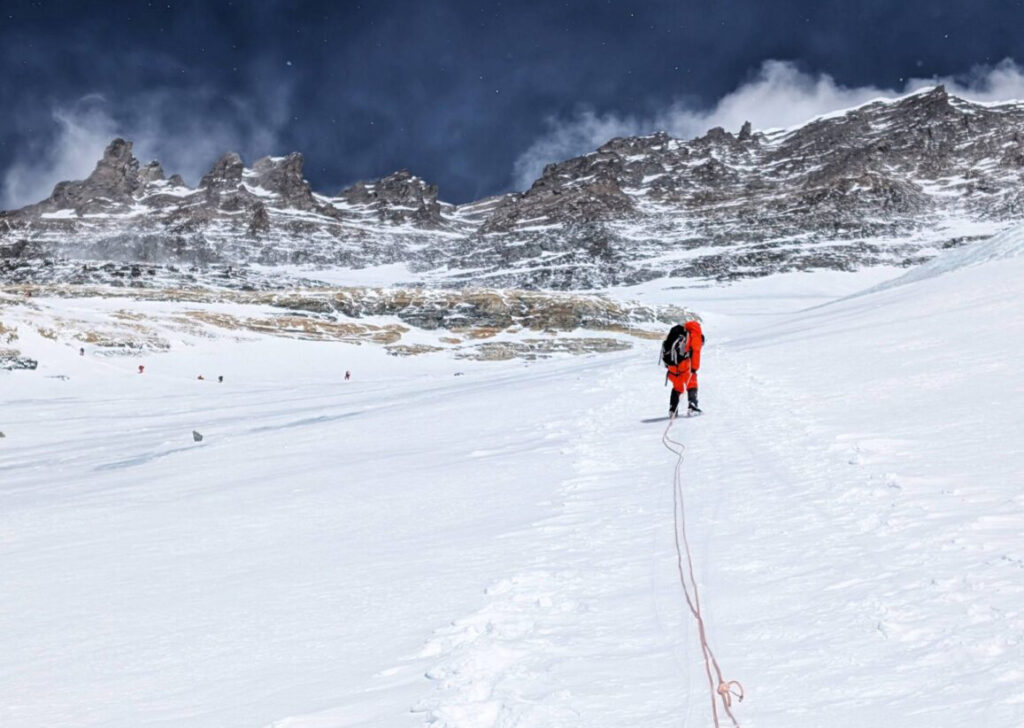
At the Yellow Band, a band of distinctive limestone rock above Camp 3 at around 7,600 metres, Hillary Dawa sat down on a rock to rest.
Thrall asked if he was all right. Dawa told him he was absolutely fine. He said to go ahead, and that he would catch up.
Thrall continued down. The Polish climber, he could now see, had run completely out of oxygen. He was in serious trouble.
When Thrall reached him and turned to look back up the mountain, Hillary Dawa had not moved from the rock. Enough time had passed. Something was wrong.
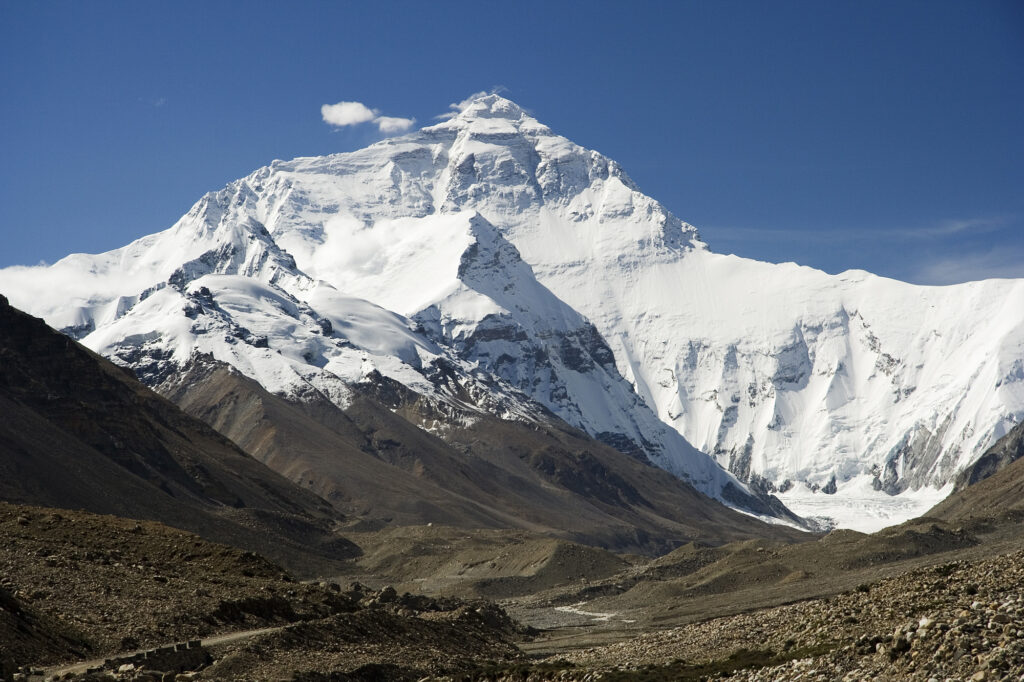
Thrall had half a litre of oxygen remaining and two people in need of help, in opposite directions, at 7,600 metres.
He came from the Royal Marines. He had spent his career operating under a philosophy of never leaving anyone behind. He also had an 11-year-old son waiting for him at home in the UK.
He made the decision to continue down with the Polish climber. At Camp 3, he shared his remaining oxygen, melted snow for water, and waited for Dawa to arrive. He never did.
The two surviving climbers had an extraordinary ordeal reaching Everest Base Camp on a route that should take a handful of hours. Both were very lucky to be alive.
Speaking to Ben Ayers on 2 June, Thrall was clear about what he believed had happened. He told him: “The chances of Da being alive are zero.” This reflects the consensus of the mountaineering community gathered at Base Camp as the season closed.
Thrall also said he has received messages on social media accusing him of abandoning Dawa. He described how painful that is for someone whose entire life is built on the principle of never leaving a colleague behind.
Ben Ayers, who filed a concurrent report for Outside magazine, spoke separately with the director of 8K Expeditions, the company that held Himalayan Traverse’s climbing permits. The director said he first heard about Dawa Sherpa’s disappearance through the media, not from the organiser of the expedition. He confirmed that insurance was available to initiate an aerial search and rescue operation. That insurance was never activated by Himalayan Traverse.
Once 8K Expeditions was informed, they moved immediately. Aerial rescue permission was granted on 2 June. Flights were expected to begin at first light on 3 June.
Hillary Dawa Sherpa leaves behind a wife and a daughter. His family was meeting with Chris Thrall at the time this account was filed.
If You Are Planning Your Own Everest Journey
The vast majority of people drawn to the Everest region are trekking to Base Camp, not attempting the summit, and the EBC trek remains one of the most extraordinary mountain journeys on earth.
But the 2026 season is a reminder that even on the trekking route, you are entering a serious high-altitude environment far from rapid medical support.
For anyone considering a guided Everest climb, the story of Himalayan Traverse Adventure and 8K Expeditions raises specific questions worth asking before you sign anything.
- Ask who holds your climbing permit. Your operator should either hold their own permit through a registered Nepal agency or name the permit holder explicitly in your contract. The 2026 situation showed what can happen when this relationship is unclear.
- Confirm rescue insurance is standard, not optional. Every reputable Everest operator includes high-altitude rescue insurance as part of the base price. Ask to see the policy details and confirm it covers helicopter extraction from above Camp 2.
- Ask how your guide is employed. A Sherpa guide subcontracted through a smaller operator may have different support structures than one employed directly by an established expedition company.
- Understand summit turnaround protocols. A late summit dramatically increases risk on descent. Ask your operator what their turnaround time is and whether it is enforced, not just suggested.
- Support the communities that make every expedition possible. The Juniper Fund supports the families of Nepali high-altitude workers who lose their lives on the mountain. Donations can be made in Hillary Dawa Sherpa’s name.
The 2026 Everest season produced moments of genuine wonder: a 32nd summit, a speed record, 1,008 people standing on top of the world in a single spring.
It also produced Hillary Dawa Sherpa, a guide from Okhaldhunga who went to the summit on Nepal’s Everest Day and did not come back down.
Hillary Dawa Sherpa, from Okhaldhunga, Nepal. He had a wife and a daughter. If this story has stayed with you, the Juniper Fund accepts donations in his name, and they make sure those donations reach the families who need them.