
This is a developing story. Last updated 26 August 2026.
At least 98 people are dead and more than 400 tourists are missing after a catastrophic Nepal flash flood struck border districts on the morning of 26 August 2026. Nepal’s prime minister’s office confirmed 95 deaths on the Nepali side, while China’s state broadcaster CCTV reported three dead and 265 missing in Tibet. The Nepal Tourism Board said 403 people were unaccounted for, including 341 foreign nationals from at least 26 countries.
What Happened on the Nepal-China Border
At approximately 8:30am local time on Wednesday, the Bhotekoshi River surged without warning through the Rasuwa district, near the border with China’s Tibet Autonomous Region. The wall of water, mud and rock destroyed villages in Timure and Syabrubesi, burying buildings to their second floors and sweeping away vehicles, bridges and people.

The flood entered Nepal from the Tibetan side through the Lhende Khola, a tributary of the Bhotekoshi. Climate scientists at the International Centre for Integrated Mountain Development (ICIMOD) in Kathmandu said an avalanche of ice and rock from a glacier blocked the river and released a sudden surge downstream. The USGS initially recorded a magnitude 4.4 earthquake, but later clarified the seismic reading was caused by the landslide itself, not by a tectonic event.
On the Chinese side, CCTV security footage captured the moment a wall of debris overwhelmed the Gyirong port. Buildings, vehicles and people were engulfed within seconds. China deployed at least 574 rescuers to the crossing, though one rescuer told CCTV it would take at least four hours to reach the site due to the depth of sediment.
Why Scientists Say This Was Not an Earthquake
Initial reports described the flood as earthquake-triggered, but the picture has shifted. A team of international scientists, including Daniel Shugar, a geologist at the University of California, believes a huge chunk of glacier sheared off and fell into the valley below. The theory is that a landslide happened simultaneously, creating a rapidly moving mix of ice and rock that cascaded down the mountain and picked up water-logged monsoon sediment.

ICIMOD noted that water levels on the Trishuli River rose by as much as nine metres in half an hour, an exceptional speed pointing to a catastrophic release rather than rainfall. Rasuwa’s chief district officer, Narendra Pariyar, confirmed there had been no rain in the district headquarters when the flood struck.
BREAKING: A major flash-flood disaster has hit Nepal’s Rasuwa district, near the border with Tibet/China, after an event early Wednesday morning caused catastrophic flooding along the Trishuli and Bhotekoshi river systems.
— GeoInsider (@InsiderGeo) August 26, 2026
Who Is Missing
The majority of the missing were tourists and pilgrims heading to Mount Kailash in Tibet, a sacred site for Hindus. The Rasuwagadhi crossing in Rasuwa is the main land border for Kailash-bound travellers, and August is a peak season for the pilgrimage despite Nepal’s monsoon making general trekking less popular.
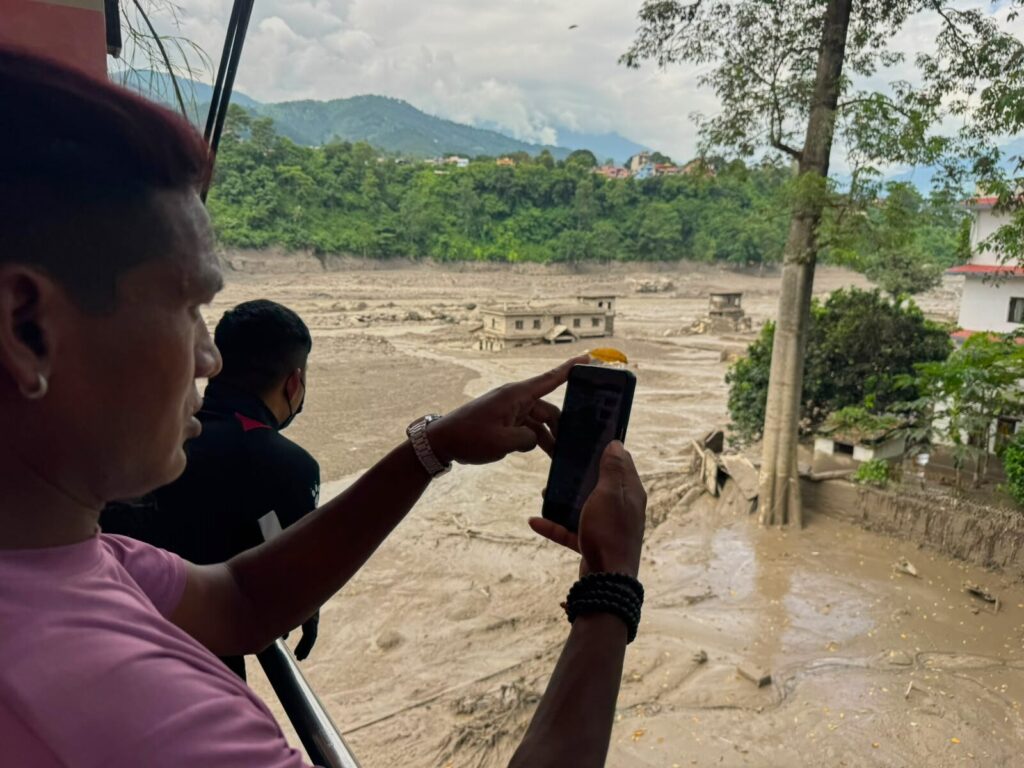
Nepal Tourism Board spokesperson Sunil Sharma said 133 of those missing were Indian nationals, with 37 non-resident Indians also unaccounted for. Tour operator Alpine Eco Trek confirmed 12 British nationals on its nine-day Kailash tour were missing, along with two Irish and four South African travellers. The missing Britons ranged in age from 13 to 65, according to travel logs shared with the Press Association. Four Nepali guides from the same company were also unaccounted for.
At least 62 Nepali nationals were missing near Gosaikunda Lake, where hundreds had been trekking ahead of the Janai Purnima festival. Nepal Police spokesperson Abi Narayan Kafle told the Associated Press that 28 police officers were also missing. Nine South Korean hydropower workers and 11 Malaysians were among other foreign nationals out of contact.

What the UK Government Has Said
Prime Minister Andy Burnham said the government would do “everything we can” to support British nationals in Nepal. Baroness Winterton, parliamentary under-secretary of state for Indo-Pacific, said the FCDO was “working closely with the Nepalese authorities following concerning reports of British nationals who are missing” and encouraged those in Nepal to follow local guidance.
The FCDO updated its Nepal travel advice on 26 August. Nepal’s immigration department indicated that foreign nationals whose visas had expired would receive extensions without cost. The International Federation of Red Cross and Red Crescent Societies announced £910,000 in emergency funding for the Nepal response.
Footage emerging from Nepal’s Rasuwa and Nuwakot districts in the wake of the massive flash flood is some of the most apocalyptic I have ever seen. The scale of the devastation is hard to fathom, with hundreds feared dead.
— Nahel Belgherze (@WxNB_) August 26, 2026
The Rescue Operation
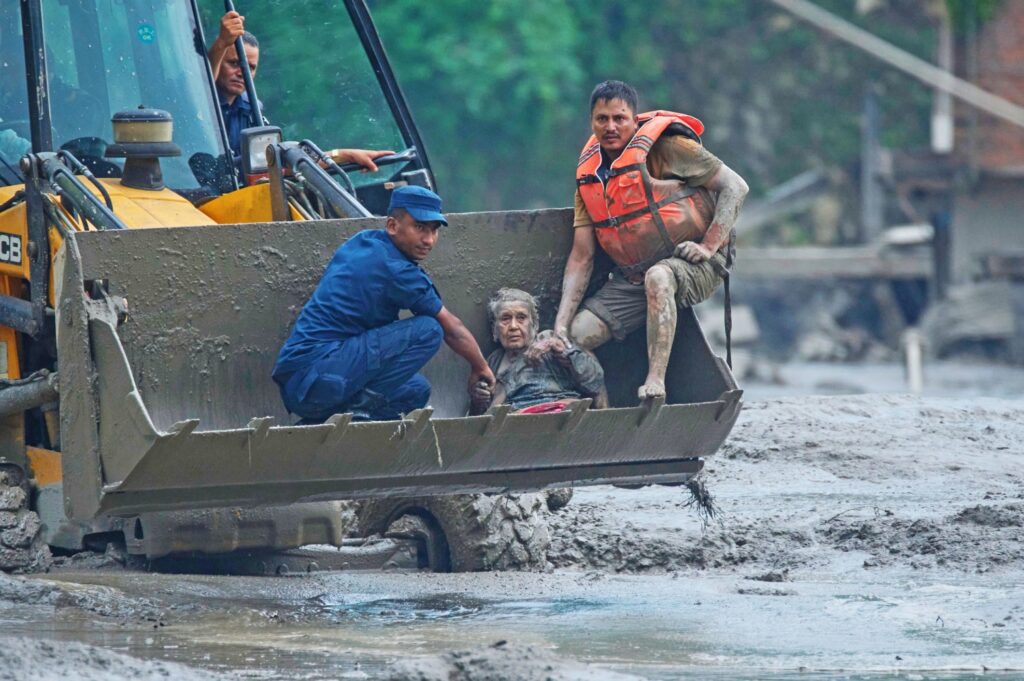
Nepal has mobilised its army, armed police force and civilian police across the affected districts. Basnet said 88 flood survivors had been rescued so far, with troops attempting to reach a further 115 stranded in the village of Mailung. Helicopters have been winching people from rooftops, but landing has been impossible in many areas because of the depth of mud and debris.

Nepal’s government has asked both India and China for assistance. Indian Prime Minister Narendra Modi spoke with Nepal’s Prime Minister Balendra Shah and said India was “prepared to provide all possible types of humanitarian assistance.” Chinese President Xi Jinping called for continued efforts to locate missing people. A joint statement from Australia, the UK, the EU, Finland, France, Norway and Switzerland expressed solidarity and encouraged those in affected areas to follow local guidance.
The Infrastructure Damage
The Nepal Electricity Authority said approximately 430 megawatts of production capacity had been damaged, including hydropower and solar facilities. That represents more than 12% of Nepal’s total national hydropower capacity of 3.2 gigawatts. The Independent Power Producers’ Association confirmed 13 hydropower projects in Rasuwa and Nuwakot were affected, and 60 workers at the 20 MW Langtang Khola project were reportedly missing.
“It all came suddenly. We heard a loud sound, like a volcano erupting. People started to scream and ran away.”
Eyewitness — The Kathmandu Post, 26 Aug 2026
At least 19 bridges have been destroyed and more than 200 cargo trucks are believed caught in the flooding. The Rasuwagadhi border crossing, Nepal’s main land trade link with China, is closed indefinitely. The Kumamoto earthquake coverage showed how natural disasters can close critical transport corridors for weeks, and the Rasuwa situation may prove worse given the scale of infrastructure loss.
The Same River Flooded 14 Months Ago
This is the second catastrophic flood on the Lhende Khola and Bhotekoshi system in 14 months. On 8 July 2025, a glacial lake outburst in Tibet sent floodwater surging down the same corridor, killing nine people and washing away the Miteri Bridge linking Nepal and China. That flood destroyed hundreds of parked trucks and electric vehicles, damaged hydropower projects totalling 211 MW and halted cross-border commerce for weeks.
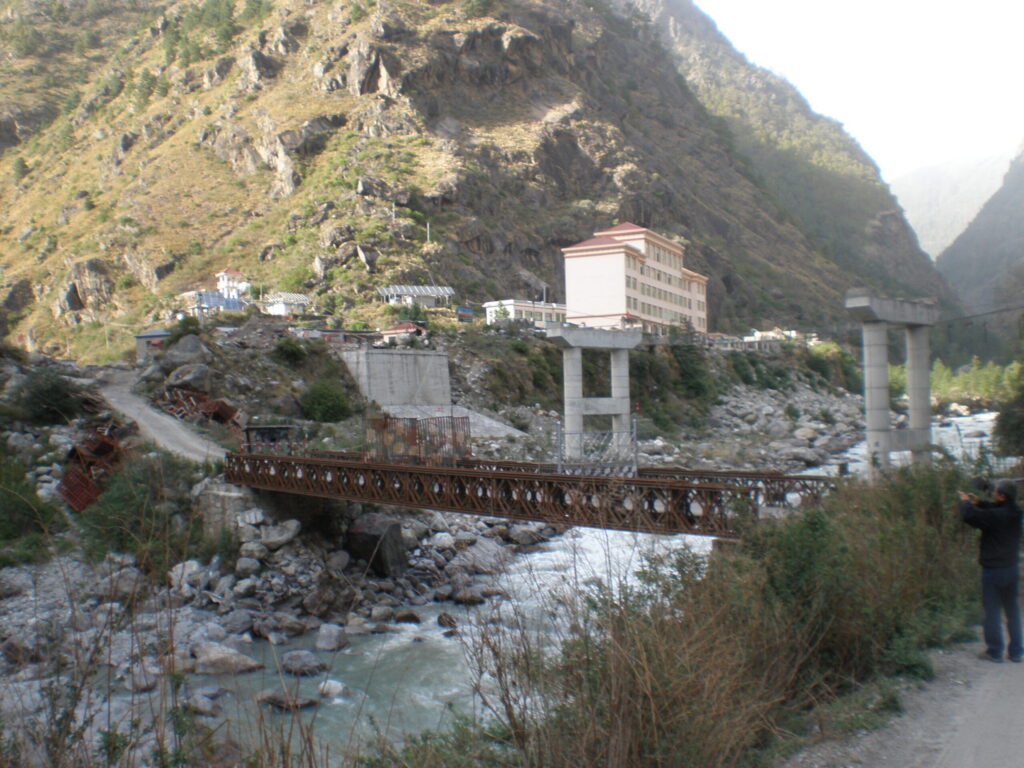
The infrastructure rebuilt after that disaster has now been destroyed again. ICIMOD specialist Saswata Sanyal said the recurrence underscored the need for early warning systems in “a warming Himalaya.” Researchers in Kathmandu found earlier this year that glaciers across the Hindu Kush Himalaya region are melting at an accelerating rate, with ice loss doubling since 2000. The Genius Travels World Travel Safety Score covers Nepal and 225 other countries with FCDO-sourced risk data.
What Happens Next
The Nepal Tourism Board has urged all tourists to avoid the affected areas and postpone travel along the Bhotekoshi and Trishuli river corridors, including Rasuwa, Nuwakot, Dhading, Gorkha and Chitwan. The board is working with tourist police and travel agencies to verify the whereabouts of everyone listed as missing, and officials stressed that many of the 403 may be safe but simply out of contact because of destroyed communications.
The death toll is expected to rise. Casualty figures from both Nepal and China remain preliminary, and large areas of the Bhotekoshi corridor are still inaccessible. If you have family or friends in the affected area, the FCDO consular assistance line is available 24/7 on +44 (0)20 7008 5000.