The EU’s own border agency told travel industry leaders in London today that the chaos at European passport control is not going away any time soon. Uku Särekanno, deputy executive director of Frontex, confirmed at an ABTA-organised summit in Westminster that some member states are “still struggling” to adopt the new Entry/Exit System (EES) and that travellers should expect disruption to continue for “one to two years.”
If you’re flying to Spain, France, Greece, Italy or anywhere else in the Schengen area this summer, this affects you directly. Since EES became mandatory across all 29 Schengen countries on 10 April 2026, UK travellers have been hitting queues of one to six hours at passport control, and the evidence from May half-term suggests the problem has not improved since the April launch.
The stakes are tangible. On the very first day of mandatory EES operation, 122 passengers were left behind in Milan when their easyJet flight to Manchester departed without them. One family spent over £1,600 rerouting themselves home via Luxembourg. A Ryanair flight from Toulouse on 30 May left around 150 passengers still stuck in border queues. IATA has warned that peak summer volumes could push waits to six hours at the worst-affected airports.
The Key Facts
- 1 to 2 years before EES delays stabilise, per Frontex today at ABTA’s Westminster summit.
- 122 passengers stranded at Milan Linate on 10 April when their easyJet Manchester flight departed without them.
- Up to 6 hours queuing possible at peak summer airports, IATA warns.
- 59% of UK travellers to Europe this year expect EES delays, a Booking.com survey found.
- No EU261 compensation: border delays fall outside airline control, so insurance is your main recourse.
What Is Actually Happening
EES went mandatory at all 1,700-plus Schengen border crossing points on 10 April 2026, replacing passport stamping with a fully digital system. For UK travellers, the first visit to a Schengen country after EES requires a facial photograph, four fingerprints and a passport scan at either a staffed booth or a self-service kiosk. That record is stored for three years, so return trips should be faster. In practice, at the busiest airports, the initial registration has been taking five to fifteen minutes per person, and when several packed flights arrive at once, the queues compound fast.
Airlines for Europe described the first day of full operation as a “systemic failure” rather than a teething issue, and called for the European Commission to allow full or partial suspension of EES through the end of the summer. Some countries have used the flexibility built into the regulation. Portugal suspended EES at Lisbon entirely for three months after December 2025 queues reached seven hours. Greece is not currently applying full EES biometric requirements to UK travellers. France’s CDG operator, which manages Paris’s two main airports, asked for a formal suspension through August while it installs 90 additional kiosks. The suspension powers can be used for up to 90 days after the April 10 deadline, with a 60-day extension possible, but their use is patchy and not guaranteed.
Today’s Frontex statement makes the timeline concrete in a way the industry warnings have not. Deputy executive director Uku Särekanno told ABTA’s summit that “member states are still adjusting to the new reality” and that some are managing well while others are “still struggling.” His most significant comment was on timescale: the situation, he said, “will stabilise in one or two years.” That is not comfort for anyone flying to Malaga in August, but it is the clearest official signal yet that this is a structural problem, not a temporary glitch. ABTA, which has been writing to every Schengen country and the European Commission since before the April launch, said this week that queues of an hour or more were still being reported at multiple destinations during May half-term.

What Passengers Are Saying Right Now
Travellers are already working through the practical questions, including whether airport add-ons like fast track still make sense when the bottleneck is at EES, not the security lane. On r/Ryanair today, one passenger asked directly:
Fast Track & EES
by u/jonoakden in r/Ryanair
At sea level, ferry and Eurotunnel passengers are seeing the same picture. P&O Ferries has been reminding passengers crossing via Dover that EES biometric checks now apply to foot and coach travellers heading to France, with car passengers coming into scope during 2026:
Heading to the EU from #PODOVER by foot or coach? New EES border checks mean non-EU nationals must register biometrics at French border control. Plan ahead.
— P&O Ferries Travel Updates (@POferriesupdate) May 2026
The UK travel industry’s assessment of the post-half-term picture was stark. ABTA’s comment piece for Travel Weekly, published on 2 June, did not hold back:
“We are now nearly two months on from the full implementation of EES on April 10. Following the recent May half-term getaway, it is clear that urgent action is still required to get this system working properly in time for the peak summer season and beyond.”
ABTA — The Travel Association — Via Travel Weekly — 2 Jun 2026

What You Can Actually Do
You cannot opt out of EES, but you can reduce the risk of it ruining your holiday. Here’s what the evidence so far suggests actually helps:
- Add two to three hours to your normal arrival time for any Schengen departure or arrival this summer. This is the single most reliable buffer against missing a flight.
- Download the EU Travel to Europe app before you fly. Pre-registering your biometric data cuts the kiosk time at the airport on the day.
- Show your boarding pass to border staff if your connection is tight. Staff at many Schengen airports are now moving passengers with imminent departures to the front of the EES queue, but you need to ask.
- Check whether your specific destination has suspended EES checks. Greece is currently not applying full biometric requirements to UK travellers. Portugal and Italy have been using their flexibility powers to stand checks down at peak times. Check the FCDO country travel advice on gov.uk before you leave, as the position changes.
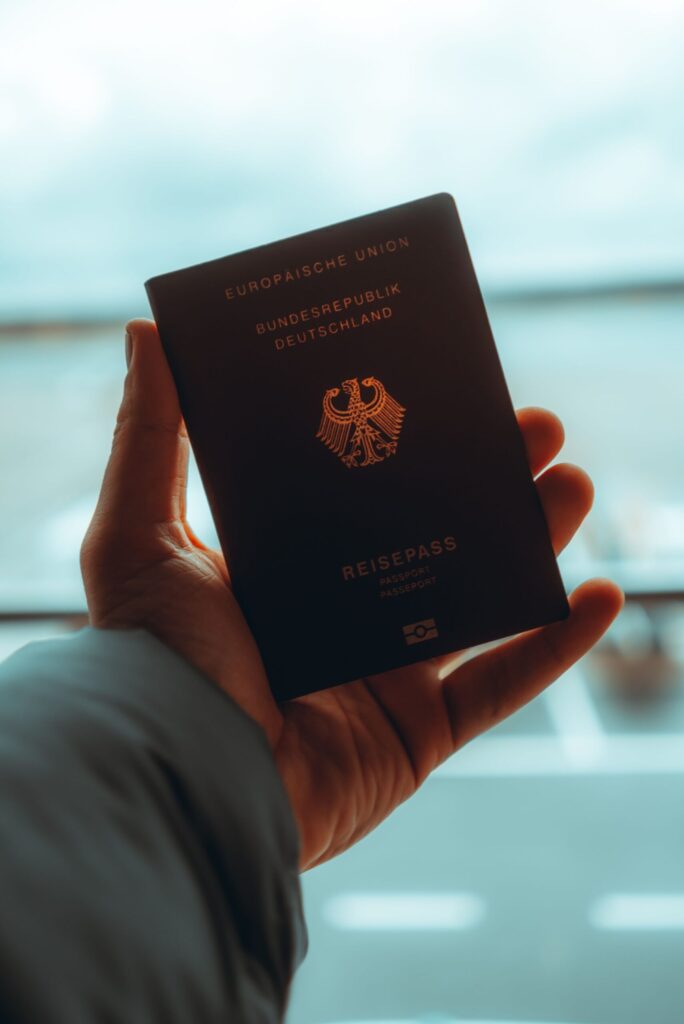
- Use a self-service kiosk if you have a biometric passport (look for the gold camera chip symbol on the cover). Kiosks are consistently faster than staffed booths for travellers with biometric documents.
- Account for each person individually in families. Children under 12 skip fingerprints but still need a facial photo. Everyone registers separately.
- Remember that first registration is the hard part. Once your data is in the system, it is valid for three years. Return trips will be significantly faster.
What You Are Owed
Passport control is operated by national border authorities, not airlines. Under both UK261 (the retained version of EU Regulation 261/2004) and the Montreal Convention, an airline’s liability for delays and cancellations does not extend to disruption caused by border authority operations. If EES queues cause you to miss your flight, the airline is not obliged to compensate you under either scheme.
The exception is a single-ticket connection. If you booked a through-itinerary on one booking reference and an EES queue at your transfer airport caused you to miss the second leg, the airline must rebook you on the next available service at no extra charge. This is part of their obligation to deliver you to your contracted destination, regardless of what caused the delay at the intermediate point. If you booked two separate tickets and missed the second flight because of a border queue, you are on your own for that second booking.
Travel insurance is your best protection here. Most standard policies include a “missed departure” or “travel disruption” clause that can cover additional transport, accommodation and rebooking costs when an event outside your control causes you to miss a flight. Check your policy wording before you travel, specifically for these clauses, and document everything at the airport if something goes wrong: queue photos, timestamps, and written confirmation from the airline of what happened. If you booked a package holiday through an ATOL-protected operator, speak to your operator first as they carry responsibility for the overall holiday under the Package Travel Regulations 2018.

Why This Keeps Happening
EES was first meant to launch in November 2022. It was then pushed to May 2023, October 2024, November 2024, before a phased start finally began on 12 October 2025. Each delay exposed the same core problem: harmonising a biometric border system across 29 countries with different IT infrastructure, staffing levels, kiosk procurement timelines and political priorities is genuinely hard, and the EU’s timeline ambitions consistently outpaced what member states could actually deliver.
Even at a 10 to 35 per cent rollout during the winter of 2025-26, queues were reaching three hours at airports like Lisbon, which had to suspend the system entirely in December after waits hit seven hours. The April 10 date for full mandatory operation went ahead despite warnings from ACI Europe, Airlines for Europe and IATA that the infrastructure was not ready for 100 per cent registration. France’s CDG operator is still in the middle of installing 90 additional kiosks. Some member states had invested heavily in self-service technology and trained their border staff thoroughly. Others had not.
The scale of the initial registration problem is also genuinely large. Every non-EU national who has never crossed a Schengen border under EES needs to be enrolled from scratch, in real time, at the border, during the busiest travel months of the year. Frontex conceded as much today: “the most challenging part is the first enrolment.” As more travellers pass through and get registered, the backlog shrinks, which is why the two-year estimate exists. But it will not shrink quickly through a summer that is expected to be one of the busiest on record.
One more system is waiting in the queue behind EES. ETIAS, the digital visa-waiver that will require UK travellers to pay €20 for pre-travel authorisation online, can only launch six months after EES is judged to be running smoothly across the full Schengen area. On current evidence, that judgement is some way off. For the most current guidance on what EES requires and which countries are applying it, ABTA’s travel to Europe advice page is updated as the situation changes.

The practical summary for anyone flying to Europe this summer: the queue is real, it is not going away quickly, and the people running the system have now said so officially. Arrive early, pre-register if you can, check your travel insurance covers missed departures, and keep an eye on the FCDO page for your destination. Once you have been through EES once and your biometrics are in the system, every subsequent trip into the Schengen area will be noticeably faster. The first crossing is the one to plan carefully around.