
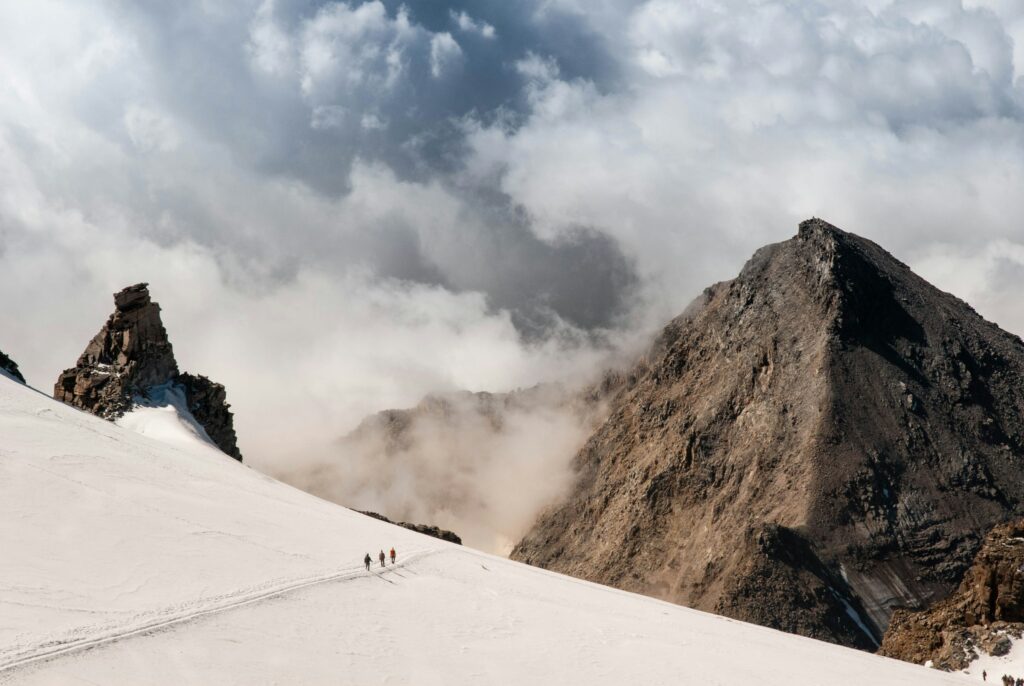
Nine climbers have died in the north-western Alps in mid-June 2026. Seven of those deaths came in a single 24-hour stretch on Friday 12 and Saturday 13 June, the worst opening to a summer mountaineering season in the area in years.
The deaths were spread across four of the most famous mountains in the Alps: Gran Paradiso in Italy’s Aosta Valley, Mont Maudit and the Brenva Spur in the Mont Blanc massif, and the Italian side of the Matterhorn. Rescue services in France and Italy were stretched across all of them simultaneously.
If you have an alpine route booked this summer, or are planning one, this article explains what happened, what the conditions are doing, and what you should do before you set foot above 3,000 metres.
The Key Facts
- Seven climbers died in 24 hours on June 12-13, the worst single weekend in the Alps in 2026.
- Four mountains involved: Gran Paradiso, Mont Maudit, Mont Blanc (Brenva Spur) and the Matterhorn.
- Falls caused every death confirmed so far. No avalanches, no storms.
- PGHM Chamonix handled 11 call-outs in a single day: exhaustion, trauma and stranded climbers.
- Low winter snowpack has exposed bare ice weeks earlier than normal, changing the character of classic routes.
What Is Actually Happening in the Alps This June
Most of the accidents on June 13 happened in good weather. That is what makes experienced rescue coordinators most uneasy about the weekend.
The conditions were not obviously hostile. Skies were largely clear, temperatures warm, and early-season visitor numbers were already climbing toward their summer peak.
Yet the falls kept coming. By Saturday evening, the PGHM mountain rescue unit in Chamonix had responded to 11 separate incidents involving exhausted mountaineers, trauma injuries, and climbers stranded on technical terrain.
Rescue officials in the Aosta Valley and Chamonix have pointed to the same underlying cause: warm temperatures have accelerated the seasonal snowmelt well ahead of schedule.
Terrain that would normally carry a layer of firm neve in mid-June is showing bare, compacted glacier ice. Ice is far less forgiving than consolidated snow. A slip at 50 degrees on ice accelerates into a fall before you can bring an axe to bear.
Italy’s CNSAS mountain rescue service recorded 528 mountain deaths across the country in 2025, the deadliest year on record. Falls accounted for close to half of those fatalities. The opening of June 2026 has followed that same pattern, closely.
Where the Deaths Happened: Four Routes, One Dark Weekend
The weekend began on the north face of Gran Paradiso, Italy’s highest mountain lying entirely within the country at 4,061 metres. Three climbers left the Rifugio Federico Chabod in Valsavarenche at around 3am on June 12, heading up the steep north face.
By 7:30pm they had not returned. A GPS locator activated by one of the party let helicopters pinpoint their position. The Soccorso Alpino Valdostano found all three at approximately 3,600 metres on the face.
The victims have since been named as Sergio Martinelli (29, an economist from Trento), Maicol Zenatti (39, an IT professional from Brentonico), and Antonio Sardano (49, a veteran emergency medic with Trentino Emergenza). Authorities have not confirmed the exact cause of the fall.
Saturday morning brought two deaths on the Kuffner Ridge of Mont Maudit (4,465m), one of the most technically demanding routes in the Mont Blanc massif. A brother and sister from Savoie, aged 24 and 26, fell from a steep section of the ridge at around 6am.
A Slovak mountain guide nearby heard falling rocks and raised the alarm. The PGHM unit from Chamonix was on the scene quickly, but both climbers were found dead.
At around 11am, a separate rope team of three climbers also fell on Mont Maudit. All three survived with injuries. That there was no further fatality on the same route within five hours was, by the account of those present, remarkably fortunate.
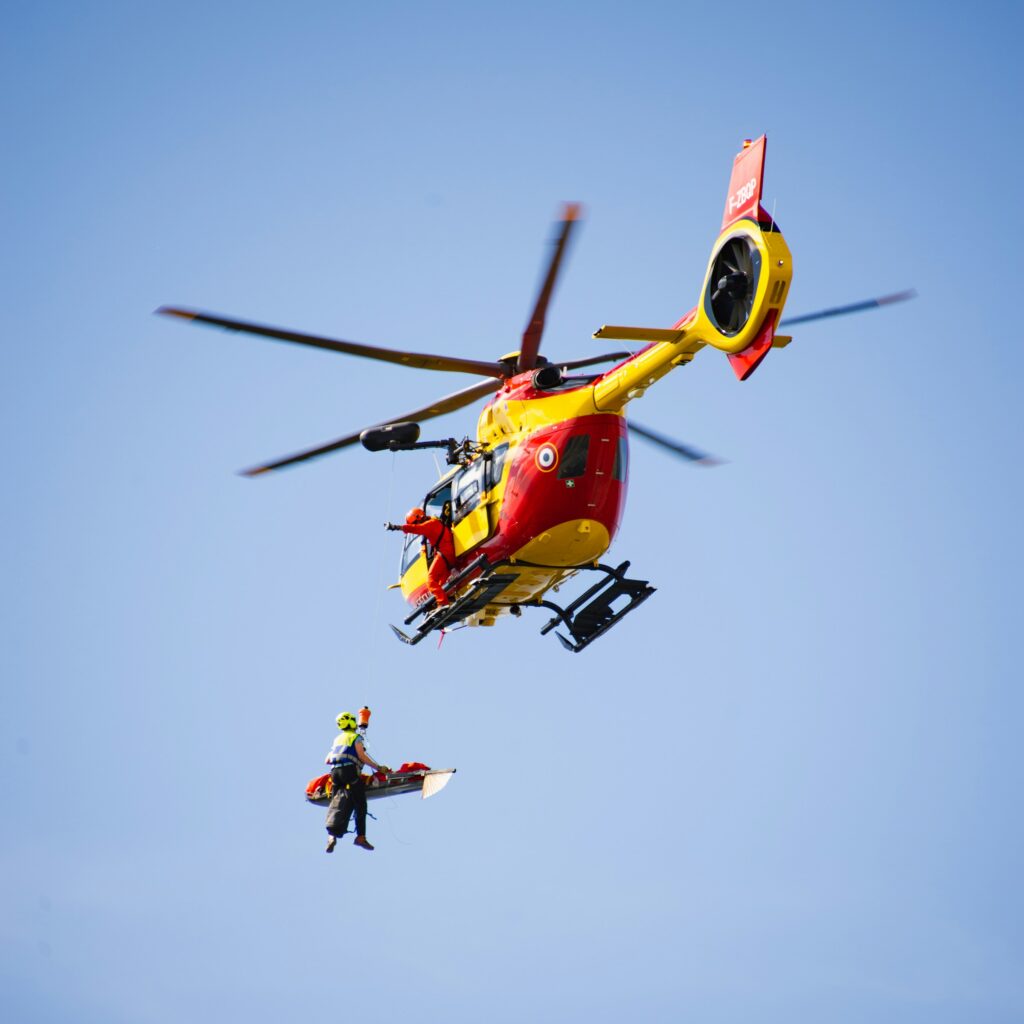
Saturday afternoon added a sixth death. A 44-year-old skier from Haute-Savoie fell approximately 100 metres while descending the Brenva Spur on the Italian side of Mont Blanc. His partner witnessed the fall and contacted rescue services. A Dragon 74 helicopter responded, but the skier was declared dead at the scene.
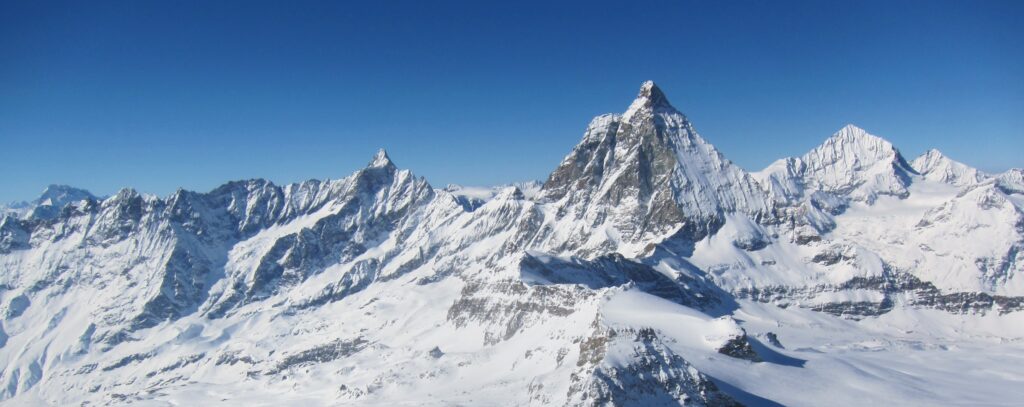
The seventh death of the weekend came on the Matterhorn. A climber fell several hundred metres near Pic Tyndall (4,241m), a subsidiary summit on the Italian ridge below the main top. His rope partner survived without injury and was recovered by rescue teams.
The broader June toll extends beyond that single weekend. On June 10, two climbers in their 40s were found dead below the Aiguille du Tricot on the Bionnassay Glacier, likely after a fall. The Ski Guru reported further fatal accidents on Mont Blanc and the Matterhorn over the following days of June 13 to 14. The confirmed mid-June death toll across the Aosta Valley and Chamonix area now stands at at least nine.
What Climbers Are Saying
Gran Paradiso North face
by u/kitbook in r/alpinism
Comment from r/alpinism
by u/Rbs311 in r/alpinism
Why the Conditions Are More Dangerous Than They Look
The winter of 2025 to 2026 brought below-average snowfall across much of the western Alps. The knock-on effect is visible now in June: the seasonal snowpack has melted out weeks ahead of the normal schedule.
Routes that would normally still carry firm, step-able neve in mid-June are showing bare glacier ice from early in the month. This matters because ice and neve behave differently underfoot.
On neve, crampon front-points bite predictably into a surface that has some give. On hard ice, that margin for error shrinks dramatically. A foot rolling on ice at 50 degrees becomes a fall before you have time to react.
The u/kitbook account from the Gran Paradiso north face described the surface as not even standard ice, but a “frozen, porous and unstable sorbet” that scattered upon axe and crampon placement. For a face graded D with more than 600 metres of sustained steep ground, that is a significant shift from expected conditions.
Rockfall risk has also increased. Permafrost in the upper rock bands of many faces acts as a natural binding agent. As it softens in warm early summers, sections of rock that would normally hold become unpredictable. Local Aosta Valley guides have described previously sound terrain as “completely unpredictable” in recent seasons.
Crevasses are opening earlier and more widely than most route descriptions account for. The transition from lower-altitude approach terrain to the glacier surface is one of the points where incidents are concentrating in June 2026.
None of this means the Alps are closed. Rescue services and local guides are clear that they are not describing conditions as universally dangerous, and classic routes are busy. But the tolerance for error is materially lower than the guidebooks and online trip reports suggest for this time of year.
What You Should Do Before Your Alpine Trip
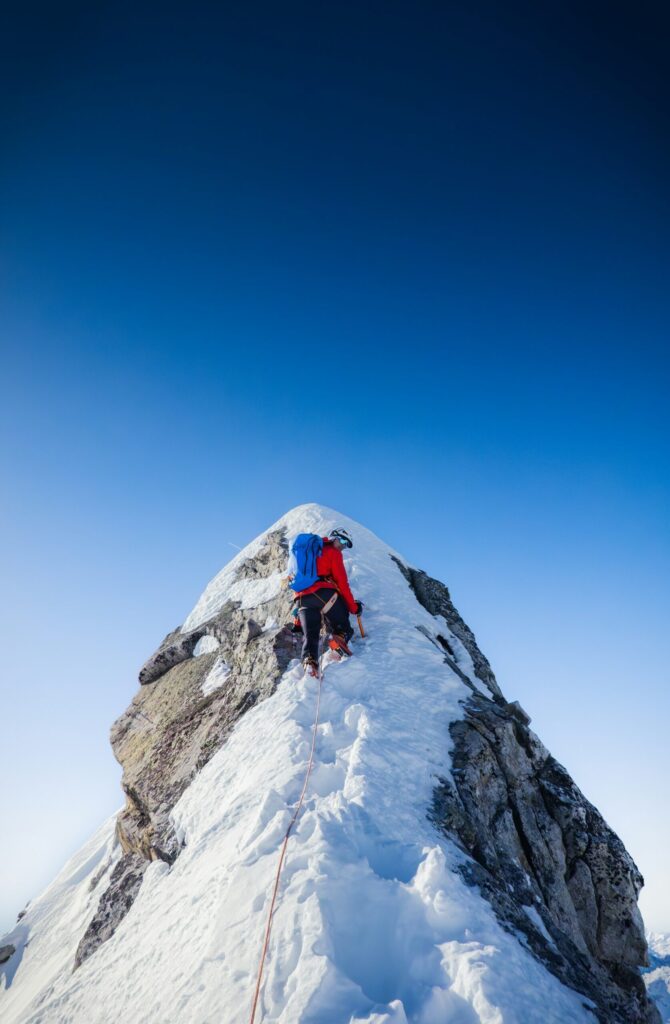
Check current route conditions before you travel, not just the weather forecast. La Chamoniarde in Chamonix publishes route status updates and is used by guides as a standard pre-ascent check. For the Aosta Valley including Gran Paradiso, the Matterhorn’s Italian side and the Brenva area, the Soccorso Alpino Valdostano issues regular bulletins.
Book a guide if you are attempting a technical route for the first time this season, or if you have not been on alpine ice recently. This applies even on routes that feel familiar from previous years. The conditions on any given face can vary significantly from one summer to the next.
Register your planned route and expected return time with your rifugio before you set out. The Gran Paradiso rescue was significantly aided by a GPS locator device activated by one of the three victims. Without it, finding three people on a 1,300-metre face in failing light would have taken far longer.
Carry a PLB or GPS locator and test the SOS function before you leave the hut. Leave a copy of your itinerary with someone in the valley as a backup.
Check your travel insurance covers mountain rescue and helicopter evacuation specifically. In France, mountain rescue by the PGHM and state services is free of charge. In Italy’s Aosta Valley, rescue costs are charged to the rescued person or their insurer in cases not followed by hospitalisation. Helicopter costs in the valley run at around 150 euros per minute.
Membership of the Austrian Alpine Club (UK section is open to non-Austrians) includes worldwide rescue and evacuation insurance. The Italian Alpine Club (CAI) has comparable coverage through the CNSAS for members on Italian peaks.
Why This Keeps Happening
Italy recorded 528 mountain deaths in 2025, the highest figure on record. Italy holds the largest share of the Alps by land area, which partly explains the numbers, but the CNSAS data points to something more specific: nearly 90 percent of those rescued were not members of any alpine club.
That suggests most incidents involve people approaching technical terrain without specialist preparation, current route knowledge, or access to the kind of regular conditions updates that club members receive.
Gran Paradiso is often described as the most accessible four-thousander entirely within Italy. That description brings large numbers of visitors who have done the straightforward normal route and who treat the mountain’s other faces as a natural progression. The north face is graded D, with 600 metres of sustained steep ice. It is not a natural progression from the normal route.

Climate change is accelerating several of the objective hazards. Thawing permafrost in alpine rock bands has destabilised sections that have held for generations. Glaciers across the Mont Blanc massif, Monte Rosa and Gran Paradiso have lost significant mass over the past two decades.
An IFMGA guide quoted by ExplorersWeb described the change: “What we all considered sound terrain is not safe anymore. The entire structure of the mountains is crumbling.” That was said in 2022. Conditions in the early summer of 2026 suggest the pace of change has not slowed.
Alpine rescue services across France, Italy and Switzerland are bracing for what is already looking like a demanding summer season. The PGHM in Chamonix alone typically handles more than 2,000 rescue interventions a year, with June and July consistently the busiest months.
The full CNSAS data on Italian mountain rescues and fatalities, including current-season updates, is available at cnsas.it. If you are planning a technical alpine route this summer, it is worth reading before you leave.