
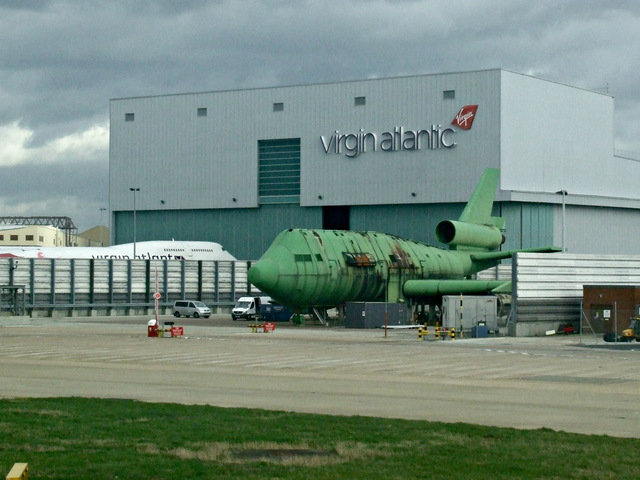
On the night of 8 August 2026, an automated fire suppression system inside Virgin Atlantic’s engineering hangar at London Heathrow triggered on its own and buried a widebody jet under a mountain of foam. There was no fire anywhere in the building. The Virgin Atlantic foam at Heathrow was a full fire response with nothing at all to fight.
If you have ever watched a washing-up bowl overflow and thought little of it, picture that scaled up to a multi-million-pound aircraft vanishing under the froth in a matter of seconds. That is close to what a Virgin engineer watched happen from the flight deck of the jet parked next door.
Nobody was hurt, no flight was cancelled and no passenger lost a bag. What the plane covered in foam leaves behind is a genuinely enormous clean-up job, and a reminder that the systems built to save aircraft can occasionally turn on them.
The Key Facts
- 8 August 2026, overnight foam discharged during a routine maintenance shift
- No active fire the system triggered without one
- One widebody jet swamped in high-expansion foam, head to tail
- Zero injuries and no reported flight disruption
- Technical review opened by Virgin with Heathrow and the system makers
The footage below, filmed inside the hangar and shared by aviation outlet AIRLIVE, shows the sheer volume of foam pouring down over the aircraft.

What Actually Happened That Night
The discharge came during a standard overnight maintenance shift, the quiet hours when engineers work through checks on aircraft that have finished flying for the day. There was no smoke and no flames, which is what makes the whole thing so odd. The alarms simply began sounding and the overhead generators did what they are built to do.
The eyewitness was a Virgin engineer doing paperwork in the cockpit of a neighbouring aircraft. One moment the flight deck was quiet; the next, the hangar alarms were blaring and the bay in front of the windscreen was disappearing under white. AIRLIVE described the scene the engineer watched unfold.
“Within seconds, high-expansion foam generators overhead unleashed a massive torrent, filling the bay and completely swamping the jet.”
AIRLIVE — AIRLIVE.net — Incident report, 8 Aug 2026
Why A Fire System Fires When There Is No Fire
Hangar suppression systems are deliberately built to act faster than any human can. A fuelled aircraft can go from a spark to a catastrophic fire in under a minute, so the sensors are set on a hair trigger and the response is total: flood the space, smother the oxygen, protect the airframe at all costs. The trade-off for that speed is the occasional false activation.
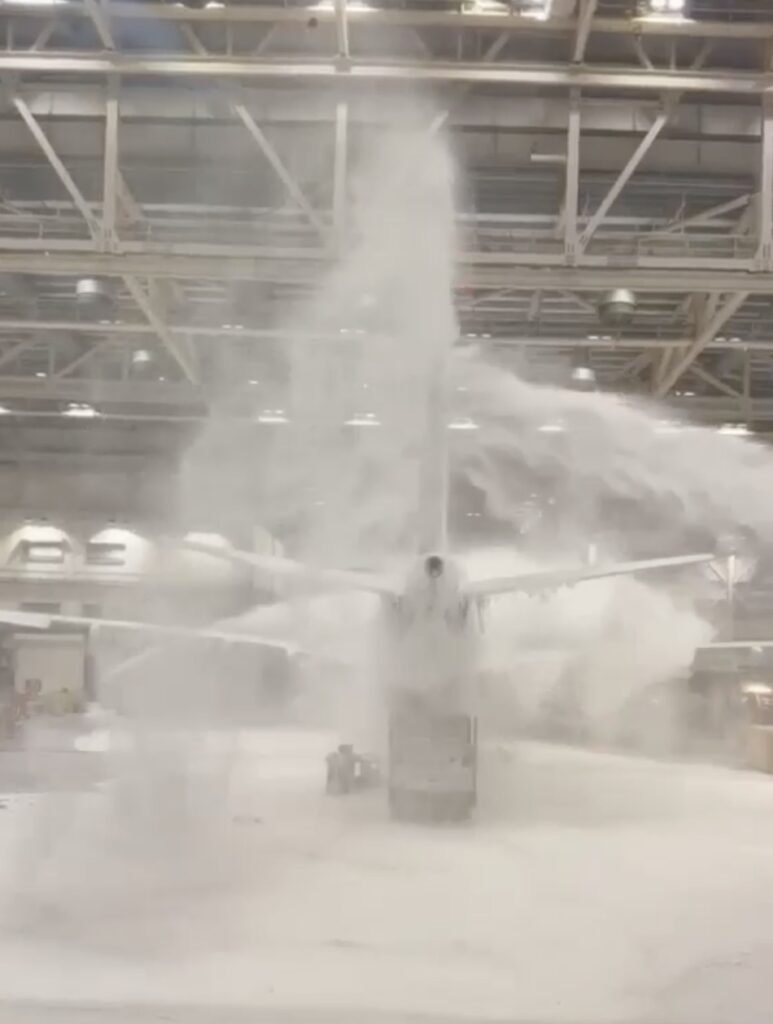
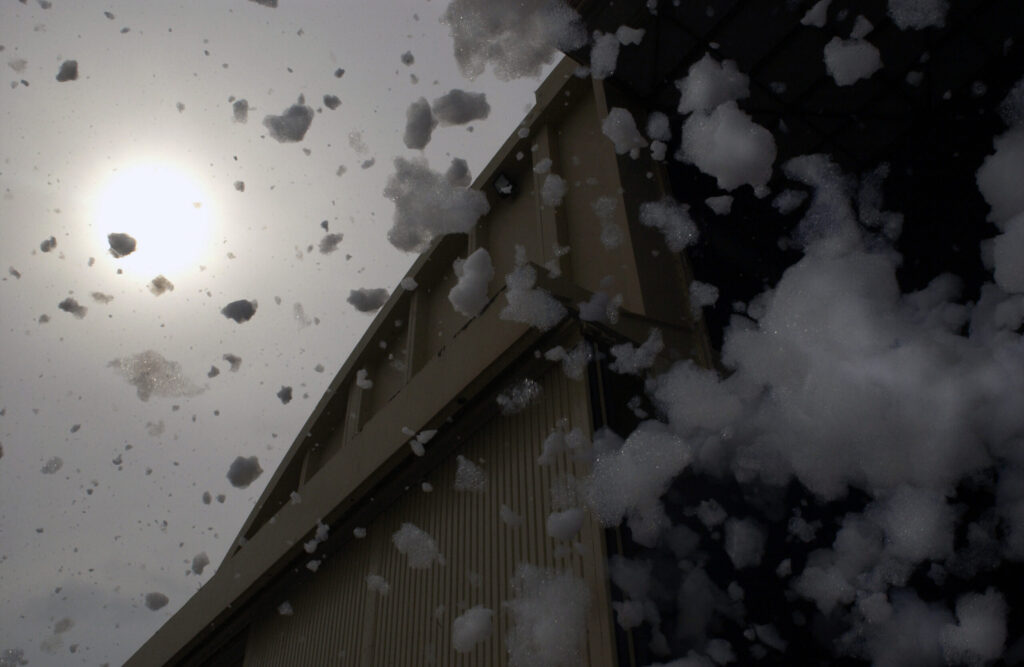
High-expansion foam is the reason the results look so dramatic. A relatively small amount of concentrate mixes with air and water to expand many hundreds of times over, which is how a bay fills to the rafters so quickly. The image below is from a routine hangar system test, and it gives a sense of the volume involved.
Virgin has opened a technical review with the airport authorities and the companies that build the system, focused on the sensors and controls that decide when to fire. An aviation industry spokesperson framed it as a reliability question rather than a safety failure, since the system did exactly what it was designed to do, only without a reason to do it.
The Bit That Looks Like Soap Suds Is A Seven-Figure Headache
To anyone watching, hangar foam looks like harmless bubble bath. To the engineers who now have to deal with it, it is one of the least welcome sights in the business. The clean-up is not a matter of a hose and a floor drain, because the foam is mildly corrosive and the environmental rules around disposing of it are strict.
Left sitting on an airframe, the residue can attack aluminium skin joints, rubber seals and exposed composites. It works its way into wheel wells and internal bays, and it fouls the sensitive external sensors that feed the flight instruments, the pitot tubes and static ports. Every one of those has to be cleaned, dried and tested by hand before the jet is signed off to fly.
- Corrosion control. Teams hand-wipe the entire airframe with neutraliser to stop the chemicals etching paint and metal.
- Engine decontamination. Any foam inside the turbofans forces full internal flushes and borescope inspections before flight clearance.
- Avionics and sensors. Pitot tubes, static ports and flight-control wiring are cleaned and tested individually.
- Hazardous disposal. Thousands of gallons must be vacuumed up and contained, never flushed into airport storm drains.
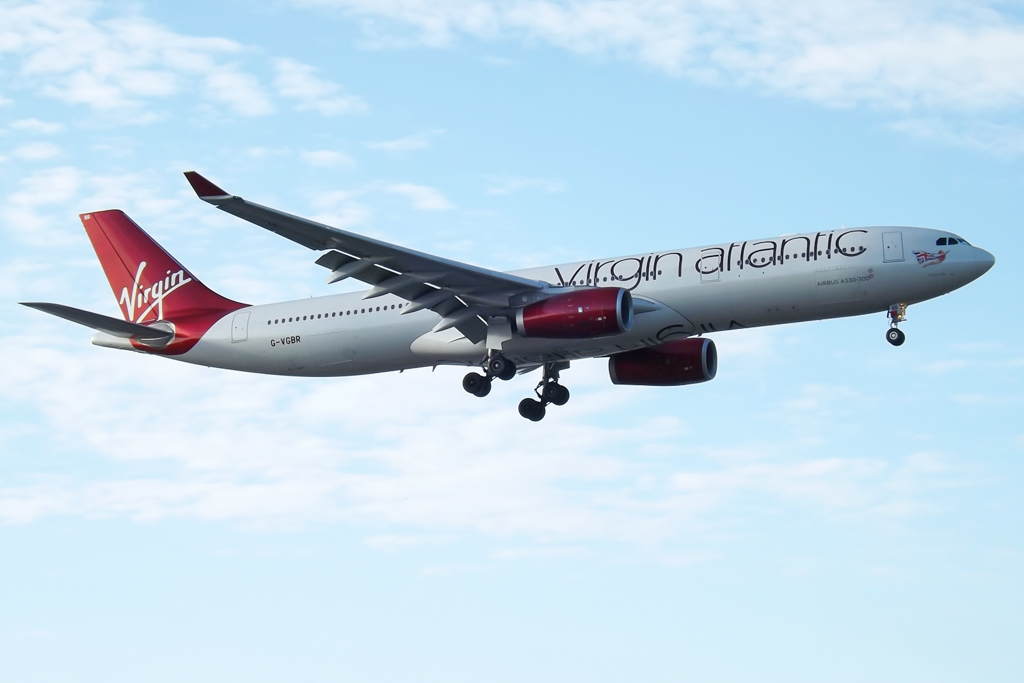
Put together, that is why a bay full of what looks like froth can keep a widebody grounded for days and run into serious money. The jet is not damaged in any obvious way, yet it cannot carry a single passenger until every last check is complete.
This is not the first time it has happened here, either. In 2020, a suppression system in a British Airways hangar at Heathrow misfired and covered the floor around a parked Boeing 777-200ER, registration G-YMMB, in the same kind of retardant foam. Heathrow has a long reputation for false fire alarms, so an overnight foam bath is less a freak event than the latest entry in a familiar list.
Should Any Of This Worry You As A Passenger
The honest answer is no. This happened in a maintenance hangar in the small hours, not on a stand with passengers boarding, and it points to an over-eager sensor rather than anything wrong with the aircraft or with Virgin’s safety culture. A system that floods a hangar the instant it suspects fire is, if anything, the sort of caution you want protecting the jet you will later fly on.
The airline expects to complete its safety audits and investigate the root cause of the sensor anomaly before restoring the maintenance bay to full capacity.
Aviation News — aviationnews.eu — report, 12 Aug 2026
It is worth keeping a sense of proportion about Heathrow stories in general. The airport is vast and things go wrong there constantly, from another Heathrow operation thrown into chaos to the wider question of what happens when airport infrastructure fails. Most of it never touches the average hi traveller.
So enjoy this one for what it is: a genuinely strange sight, a hangar full of foam, a very tired clean-up crew, and a jet that will be back in the sky once every sensor has been wiped down and signed off. No drama, just an unusually foamy night at the world’s busiest two-runway airport.